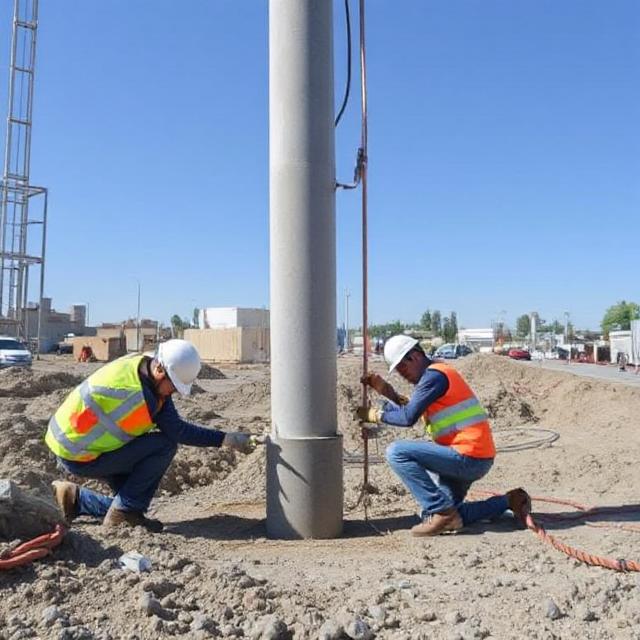


Concrete core testing is one of the most reliable methods for evaluating the in-placestrength and condition of existing concrete structures. By extracting physical samplesdirectly from a structure, engineers can assess actual performance and durability. AtPrime Test Engineering, we perform comprehensive laboratory testing—includingcompressive strength, pH, carbonation, chloride, and sulfate analysis—to provide acomplete understanding of concrete condition.
Introduction
Concrete structures are subject to environmental exposure, loading conditions, and aging, all of which can affect performance over time. Surface inspections alone are not sufficient to evaluate internal conditions. Core testing provides direct, measurable data that supports accurate structural assessment and informed decision-making.
What Is Concrete Core Testing?
Concrete core testing involves extracting cylindrical samples from hardened concreteand analyzing them in a laboratory to evaluate both mechanical properties and chemicalcondition.
Key Objectives:
- Determine in-place concrete strength
- Assess durability and chemical exposure
- Identify deterioration mechanisms
- Support repair and retrofit decisions
What Core Testing Reveals
 Compressive Strength
Testing in accordance with ASTM C39 provides direct measurementof concrete strength, allowing evaluation of structural capacity andcompliance with design requirements.
 pH and Chemical Condition
pH testing helps determine the alkalinity of concrete, which is criticalfor protecting embedded reinforcement from corrosion.
 Carbonation Depth
Carbonation testing identifies how far atmospheric carbon dioxidehas penetrated the concrete, reducing alkalinity and increasing therisk of corrosion.
 Chloride Content
Chloride testing (ASTM C1152) measures the presence of chloridesthat can accelerate corrosion of reinforcing steel, particularly incoastal or exposed environments.
 Sulfate Exposure
Sulfate testing evaluates chemical attack that can lead to expansion,cracking, and long-term deterioration of concrete.
 Material Quality and Defects
Core samples may reveal voids, cracking, segregation, or otherconstruction-related deficiencies that impact performance.
Testing Standards and Procedures
Concrete core extraction is performed in accordance with ASTM C42. After extraction,cores are documented, conditioned, and prepared for laboratory testing. Compressivestrength testing is conducted per ASTM C39, while chemical and durability testingfollows applicable ASTM standards for chloride, carbonation, pH, and sulfate analysis.
When Core Testing Is Needed
- Structural condition assessments
- Fire or damage investigations
- Corrosion evaluation studies
- Concrete repair and waterproofing projects
- Seismic retrofit and strengthening design
Why Core Testing Is Critical
Concrete deterioration is often not visible at the surface. Without proper testing, hiddenissues such as corrosion, chemical attack, or reduced strength may go undetected. Coretesting provides reliable data that reduces uncertainty, improves safety, and supportscost-effective repair strategies.
How Prime Test Engineering Can Help
Prime Test Engineering provides full-service concrete coring and laboratory testing. Weintegrate GPR scanning prior to coring to avoid embedded reinforcement and ensuresafe sampling. Our laboratory testing program includes compressive strength, pH,carbonation depth, chloride content, and sulfate analysis.
We deliver clear, accurate results to support engineering evaluation, repair design, andlong-term performance planning.
Conclusion
Concrete core testing provides a complete picture of both the strength and durability of astructure. By combining mechanical and chemical testing, it allows engineers to identifyrisks, understand deterioration mechanisms, and make informed decisions.
For existing structures, this level of insight is essential for ensuring safety, performance,and longevity.
Get a Quote
Contact Prime Test Engineering today to schedule concrete coring and laboratory testing services.
👉 Visit: https://primetesteng.com/