

Reinforced concrete is designed to be durable, but over time, environmental exposure and material conditions can lead to corrosion of embedded steel reinforcement. Rebar corrosion is one of the most common causes of concrete deterioration, often resulting in cracking, spalling, and structural weakening. At Prime Test Engineering, we provide testing and evaluation services to identify corrosion and its underlying causes, helping property owners make informed repair decisions.
Introduction
Steel reinforcement within concrete is protected by the material’s high alkalinity, whichcreates a passive layer that prevents corrosion. However, this protection can break downdue to environmental and chemical factors. Once corrosion begins, it can expandrapidly, causing internal pressure that damages the surrounding concrete.
What Is Concrete Rebar Corrosion?
Rebar corrosion occurs when embedded steel reacts with oxygen and moisture, formingrust. This process increases the volume of the steel, creating internal stresses that leadto cracking and delamination of the concrete.
Key Effects:
- Cracking and surface distress
- Concrete spalling and delamination
- Loss of bond between steel and concrete
- Reduction in structural capacity
Main Causes of Rebar Corrosion
 Chloride Intrusion
Chlorides from deicing salts, marine environments, or contaminatedmaterials can penetrate concrete and break down the protectivelayer around steel, initiating corrosion.
 Carbonation
Carbon dioxide from the atmosphere reacts with concrete, reducingits alkalinity. As pH levels drop, the protective environment aroundthe rebar is lost, making corrosion more likely.
 Moisture and Oxygen Exposure
Corrosion requires both moisture and oxygen. Cracks, poor drainage,and water intrusion create conditions that accelerate the corrosionprocess.
 Poor Concrete Quality or Low Cover
Concrete with high permeability or insufficient cover allows fasterpenetration of harmful elements, increasing the risk of corrosion.
 Construction Deficiencies
Improper placement, segregation, or inadequate curing can createweak zones that are more susceptible to moisture and chemicalintrusion.
How Corrosion Is Detected
Rebar corrosion is often not visible until damage becomes severe. Testing andevaluation are required to identify early-stage deterioration.
Common methods include:
 Half-Cell Potential Testing
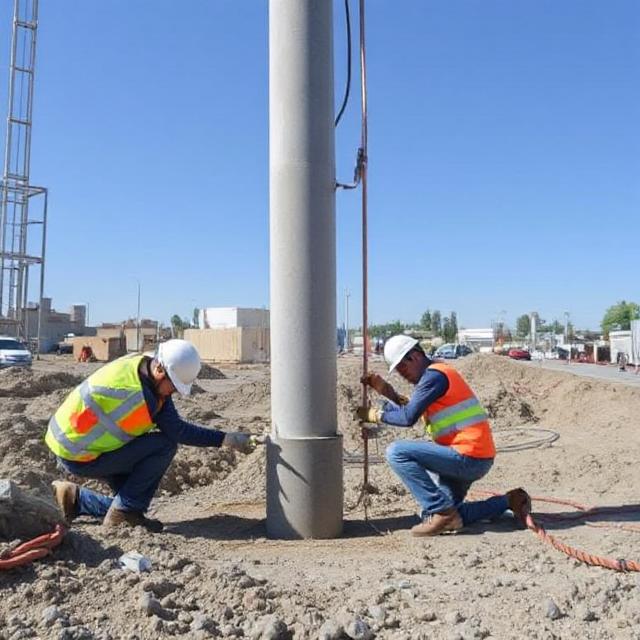
Half-cell testing (ASTM C876) measures electrical potential toidentify areas with a high likelihood of active corrosion. Morenegative readings indicate increased corrosion risk, allowingmapping of affected zones.
 Chloride Content Testing
Chloride testing (ASTM C1152) measures chloride levels withinconcrete, which can break down steel protection and initiatecorrosion. Results help assess contamination and corrosion risk.
 Carbonation Testing
Carbonation testing determines how far reduced pH has penetratedthe concrete. A chemical indicator reveals the depth whereprotective alkalinity has been lost, increasing corrosion potential.
Why Early Detection Is Critical
If left unaddressed, corrosion can compromise structural performance and lead tocostly repairs. Early detection allows for targeted repairs, reducing the extent ofdamage and extending the service life of the structure.
How Prime Test Engineering Can Help
Prime Test Engineering provides corrosion assessment services, including chloridetesting, carbonation analysis, pH evaluation, and concrete core testing. We combinefield testing with laboratory analysis to identify the root causes of deterioration andsupport effective repair strategies.
Our team works with property owners, engineers, and contractors to deliver accuratedata and practical recommendations.
Conclusion
Concrete core testing provides a complete picture of both the strength and durability of a structure. By combining mechanical and chemical testing, it allows engineers to identify risks, understand deterioration mechanisms, and make informed decisions.
For existing structures, this level of insight is essential for ensuring safety, performance,and longevity.
Get a Quote
Contact Prime Test Engineering today to schedule corrosion testing and structural evaluation services.
👉 Visit: https://primetesteng.com/