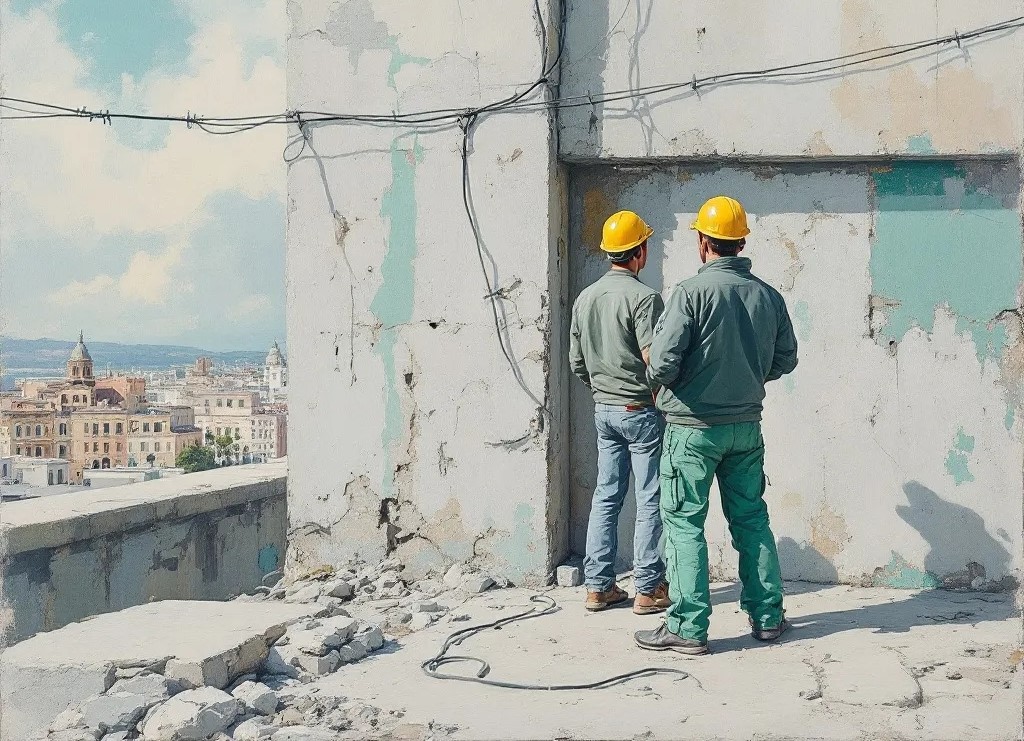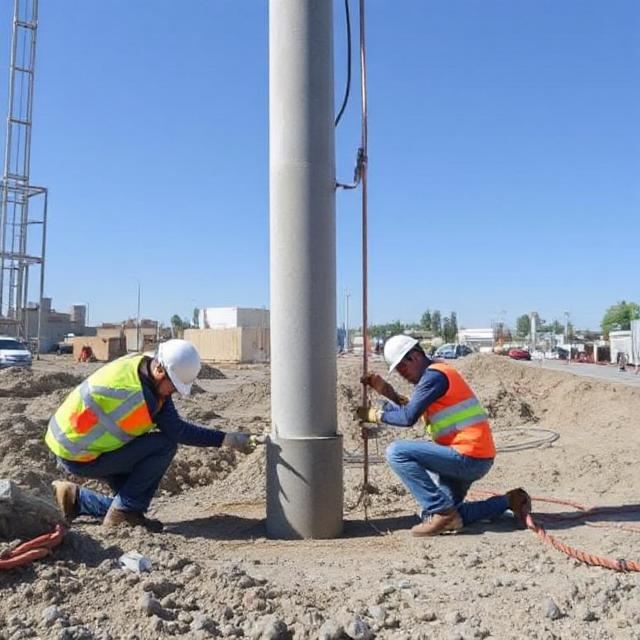

Concrete delamination testing helps property owners, building managers, and engineers identify areas of possible internal separation in reinforced concrete. A parking deck, podium slab, or concrete beam may appear sound while shallow deterioration develops beneath its surface. Non-destructive techniques such as chain drag surveys and hammer sounding can screen accessible areas before extensive concrete removal is considered.
At Prime Test Engineering, these techniques can form part of a condition assessment to identify potentially deteriorated concrete, document approximate affected areas, and help plan further investigation.
What Is Concrete Delamination?
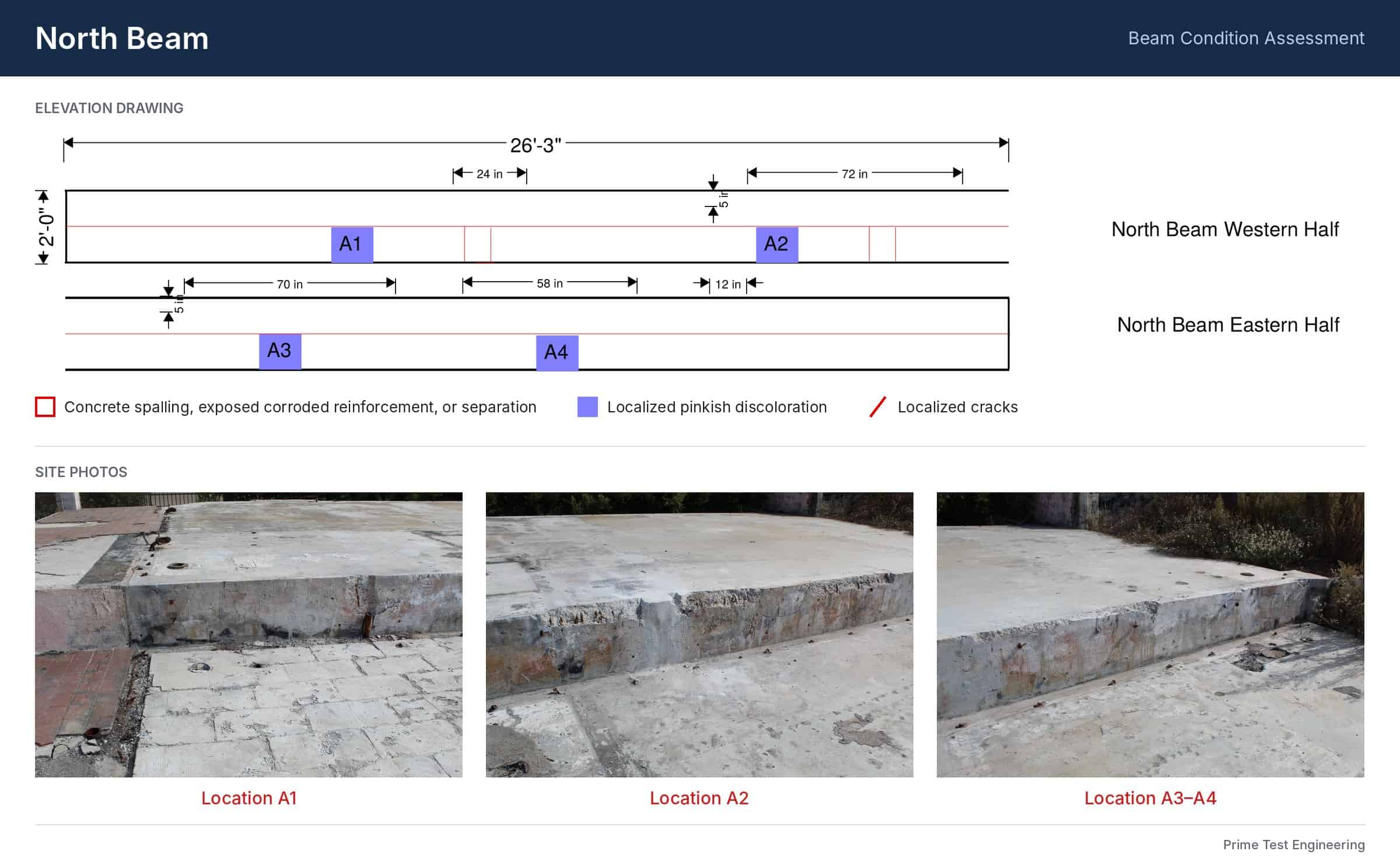
Delamination is the separation of concrete along an internal plane, sometimes near embedded reinforcement. Corrosion of reinforcing steel is a common contributor: expanding corrosion products can create cracking approximately parallel to the concrete surface. Poor bonding between placements or construction-related defects can also create separation planes.
Delamination is different from spalling. Delamination can remain concealed; spalling occurs when concrete breaks away and may expose reinforcement. Because visible damage may not show the full extent of deterioration, acoustic sounding can help establish where closer inspection is warranted.
How Does Chain Drag Testing Detect Concrete Delamination?
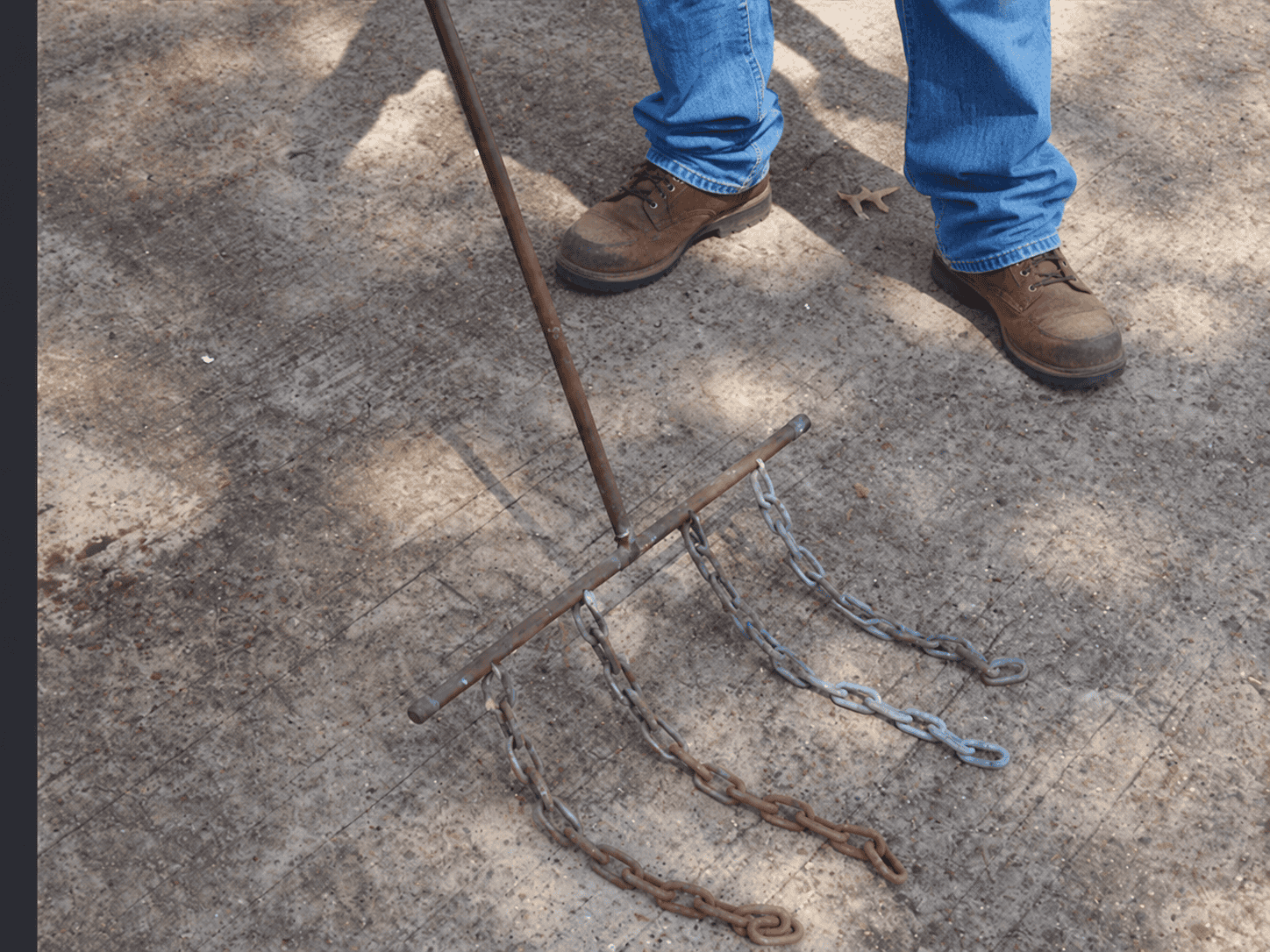
During a chain drag survey, a technician drags a metal chain across an accessible horizontal concrete surface and listens for differences in the acoustic response. Relatively sound concrete often produces a sharper ringing response; shallow delaminated areas may sound duller or hollow. Suspicious areas can be checked again, marked, and mapped.
Where Is Chain Drag Testing Used?
- Parking garage decks and elevated slabs
- Podium slabs and accessible concrete decks
- Bridge decks
- Other large horizontal concrete surfaces where shallow delamination is suspected
Chain drag testing can efficiently screen open areas, but coatings, surface texture, surrounding noise, slab geometry, and defect depth may affect interpretation. It does not directly determine the depth or cause of separation.
Call Us: (310) 205-2535 Get a Quote
How Does Hammer Sounding Identify Delaminated Concrete?
Hammer sounding, also known as hammer tapping, involves lightly striking a concrete surface with a suitable hammer and listening for changes in response. A dull or hollow sound may indicate shallow delamination, although material interfaces, thickness changes, and geometry can also alter the sound.
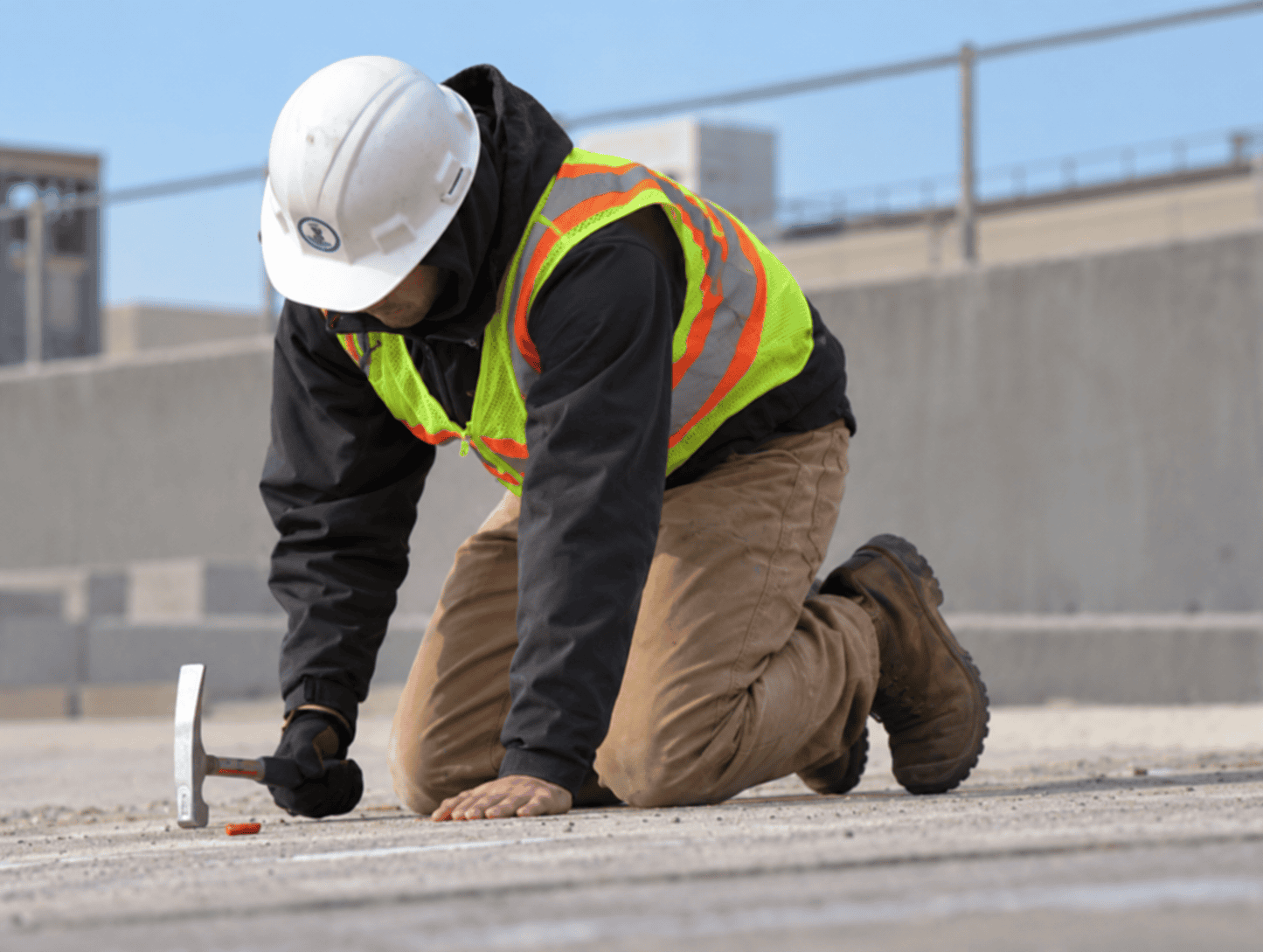
Hammer sounding is particularly practical for localized areas, beams, columns, walls, and accessible overhead surfaces where safe access is provided. Results help identify areas for follow-up; they do not independently confirm the defect’s depth, cause, or structural significance.
Hammer Sounding vs. Rebound Hammer Testing
These are different procedures. Hammer sounding is an acoustic screening technique for possible delamination. A Schmidt rebound hammer measures a rebound index associated with surface hardness; it is not a substitute for delamination sounding.
Chain Drag vs. Hammer Sounding: Which Is Better?
| Consideration | Chain Drag Survey | Hammer Sounding |
|---|---|---|
| Best application | Large horizontal surfaces | Localized and irregular surfaces |
| Typical elements | Decks, slabs, parking structures | Beams, columns, walls, slabs |
| Approach | Chain moved continuously | Individual light hammer impacts |
| Primary finding | Possible shallow delamination | Possible shallow delamination |
Both methods may be included in the same investigation. Selection depends on the element geometry, surface accessibility, and investigation objectives.
What Causes Concrete Delamination?
Reinforcing Steel Corrosion
Expansion associated with corrosion of embedded steel can crack or separate concrete cover.
Water Intrusion and Chloride Exposure
Water and chloride contamination may contribute to reinforcement corrosion, especially in exposed and coastal structures.
Construction-Related Defects
Inadequate bonding between placements, consolidation issues, or other construction defects can create weakness or separation planes.
Loading and Environmental Exposure
Under some conditions, cyclic loads and environmental changes can contribute to the progression of deterioration. A survey identifies potentially affected areas but does not, by itself, establish the underlying cause.
How Are Concrete Delamination Survey Results Documented?
A field investigation often begins with visual observations of cracks, spalls, staining, previous patches, and other distress. Technicians then use appropriate sounding methods within the agreed scope and document abnormal responses on photographs, field sketches, or condition maps.
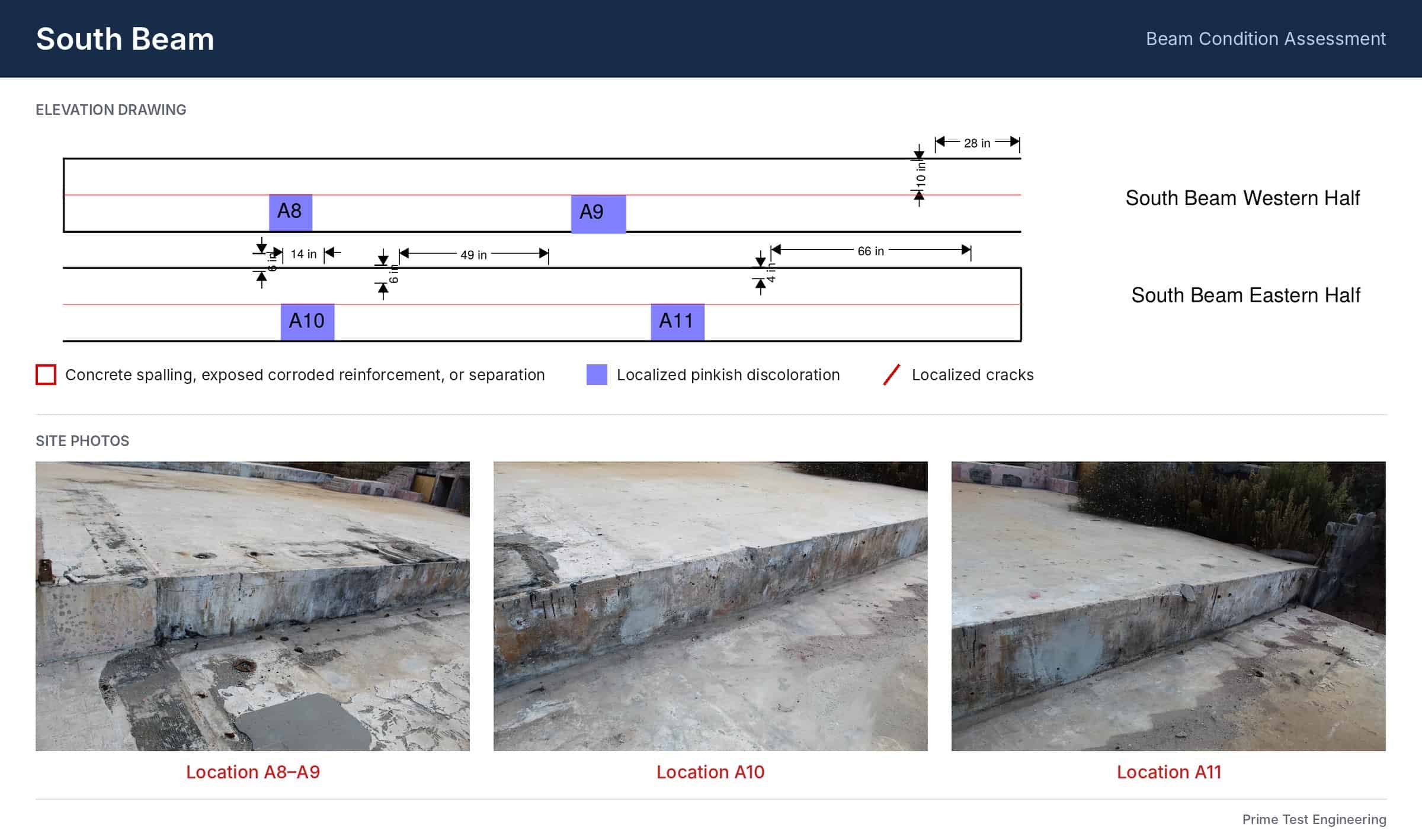
Recorded locations and approximate boundaries can support estimates of the potentially affected surface area, help prioritize follow-up testing, and inform preliminary repair planning. The marked areas do not necessarily represent every concealed defect or the full depth of deterioration.
Call Us: (310) 205-2535 Get a Quote
When Is Additional Testing Needed?
When the cause, extent, or significance of potential delamination is unclear, engineers may recommend complementary investigation:
- Half-cell potential testing: evaluates the likelihood of active reinforcement corrosion under applicable conditions (ASTM C876).
- Ground penetrating radar (GPR): can help locate reinforcement and other embedded features to inform test location selection.
- Chloride content testing: investigates chloride contamination associated with corrosion risk.
- Impact echo: may help investigate internal reflectors or thickness where conditions permit.
- Exploratory openings and concrete coring: can provide direct observations or material samples when needed.
The combination of methods should match the questions the evaluation is intended to answer.
When Should Property Owners Consider a Delamination Survey?
Consider an evaluation when there are recurring cracks, concrete spalling, rust staining, hollow-sounding areas, distress around earlier repairs, or suspected water-related deterioration. Surveys can also help before defining the scope of parking garage, podium slab, or other concrete restoration work.
If loose or falling concrete presents a potential immediate hazard, seek prompt assessment by an appropriately qualified professional and consider appropriate access restrictions or protective measures.
Concrete Delamination Testing at Prime Test Engineering
Prime Test Engineering provides non-destructive testing and structural condition assessment services throughout Southern California. Depending on project requirements, an investigation may include visual observations, chain drag surveys, hammer sounding, deterioration mapping, and complementary testing to support engineering evaluation and repair planning.
Frequently Asked Questions
Can concrete delamination be detected without demolition?
Yes. Chain drag surveys and hammer sounding can screen for possible shallow delamination without removing concrete. Verification may still be required for important findings.
Is chain drag testing destructive?
No. It is generally a non-destructive surface sounding method.
Can hammer sounding determine delamination depth?
No, not reliably by itself. Other testing or exploratory openings may be needed.
Does hollow-sounding concrete always need repair?
Not necessarily. The response depends on the cause, location, extent, exposure, and structural significance, which may require engineering evaluation.
Conclusion
Chain drag surveys and hammer sounding provide practical ways to identify areas of possible shallow concrete delamination before extensive removal is considered. In combination with condition mapping and appropriate follow-up testing, they can support property maintenance and concrete repair planning.
Contact Prime Test Engineering to discuss a concrete delamination testing scope for your property.
Call Us: (310) 205-2535 Get a Quote