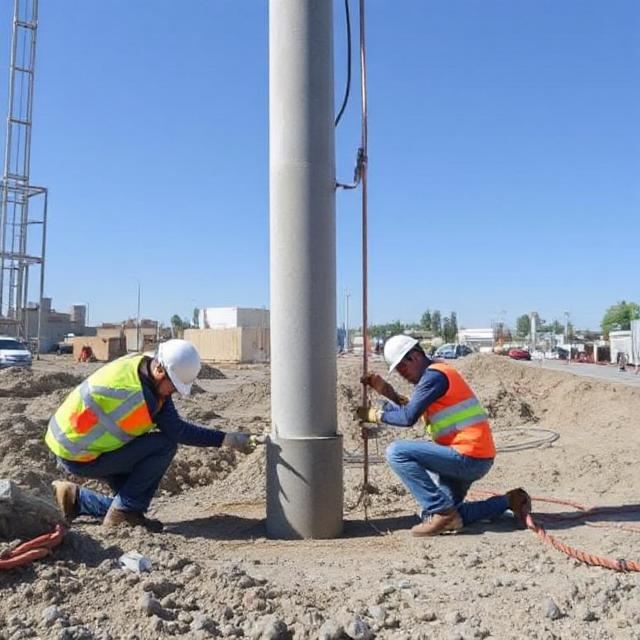

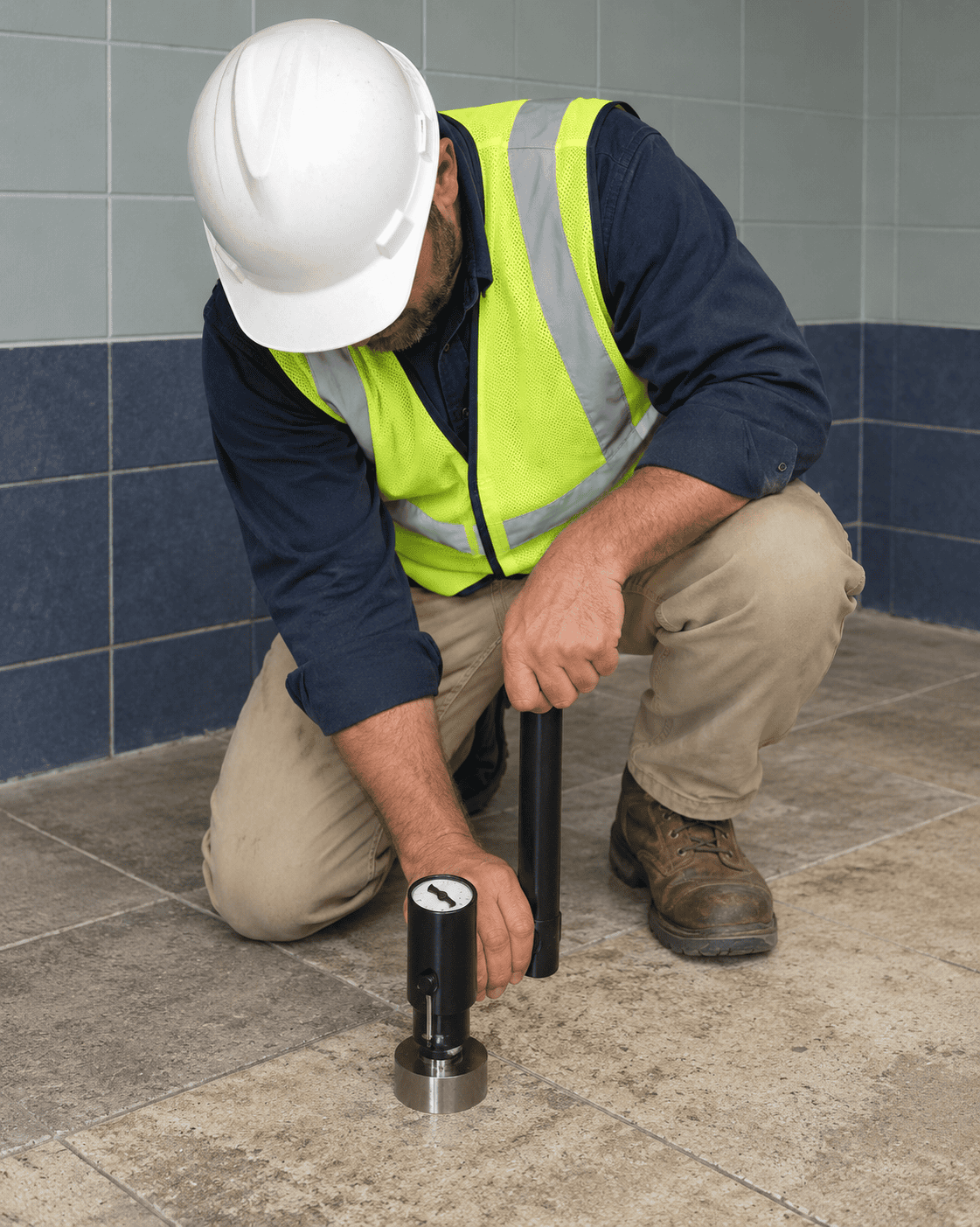
The pull-off test measures how well a coating is bonded to concrete, and how strong the concrete surface itself is in tension. It answers a simple but critical question: will the new material stay attached once it is in service?
At Prime Test Engineering, we perform pull-off testing under ASTM C1583 on concrete repairs, overlays, toppings, and surface preparation work. Bond failures are often invisible until the material cracks, hollows, or delaminates, so testing during or after installation helps owners and contractors confirm the work before problems develop.
What Is a Pull-Off Test?
A pull-off test, also called a direct tension bond test, pulls a small bonded area of the surface straight up until it breaks. The force needed to cause the break, divided by the test area, gives the tensile bond strength in psi.
Just as important as the number is where the break happens. The location of the failure shows whether the weak point is the bond, the repair material, or the concrete underneath.
When Is Pull-Off Testing Used?
Pull-off testing is common wherever a new material depends on its bond to existing concrete:
- Concrete repairs: patch repairs on balconies, parking structures, columns, and walls.
- Overlays and toppings: bonded overlays on slabs, decks, and ramps.
- Surface preparation checks: confirming the concrete surface is sound before coatings or overlays are applied.
- Coatings and membranes: traffic coatings and waterproofing systems on podium decks and balconies.
- Strengthening systems: checking the bond of externally applied systems such as fiber-reinforced polymer (FRP).
- Existing concrete evaluation: measuring surface tensile strength of older or damaged concrete before repairs are designed.
For coatings applied to concrete, a related standard, ASTM D7234, is often used. The project specification states which method applies.
Call Us: (310) 205-2535 Get a Quote
How Is the Pull-Off Test Performed?
ASTM C1583 sets out the procedure. A typical test follows these steps:
- Locate the test points. Test locations are chosen to represent the repaired or overlaid area, avoiding rebar and embedded items. Scanning is often used to check what lies beneath.
- Core the test area. A partial-depth core is drilled through the overlay or repair and into the concrete below, isolating a small cylinder of material without removing it.
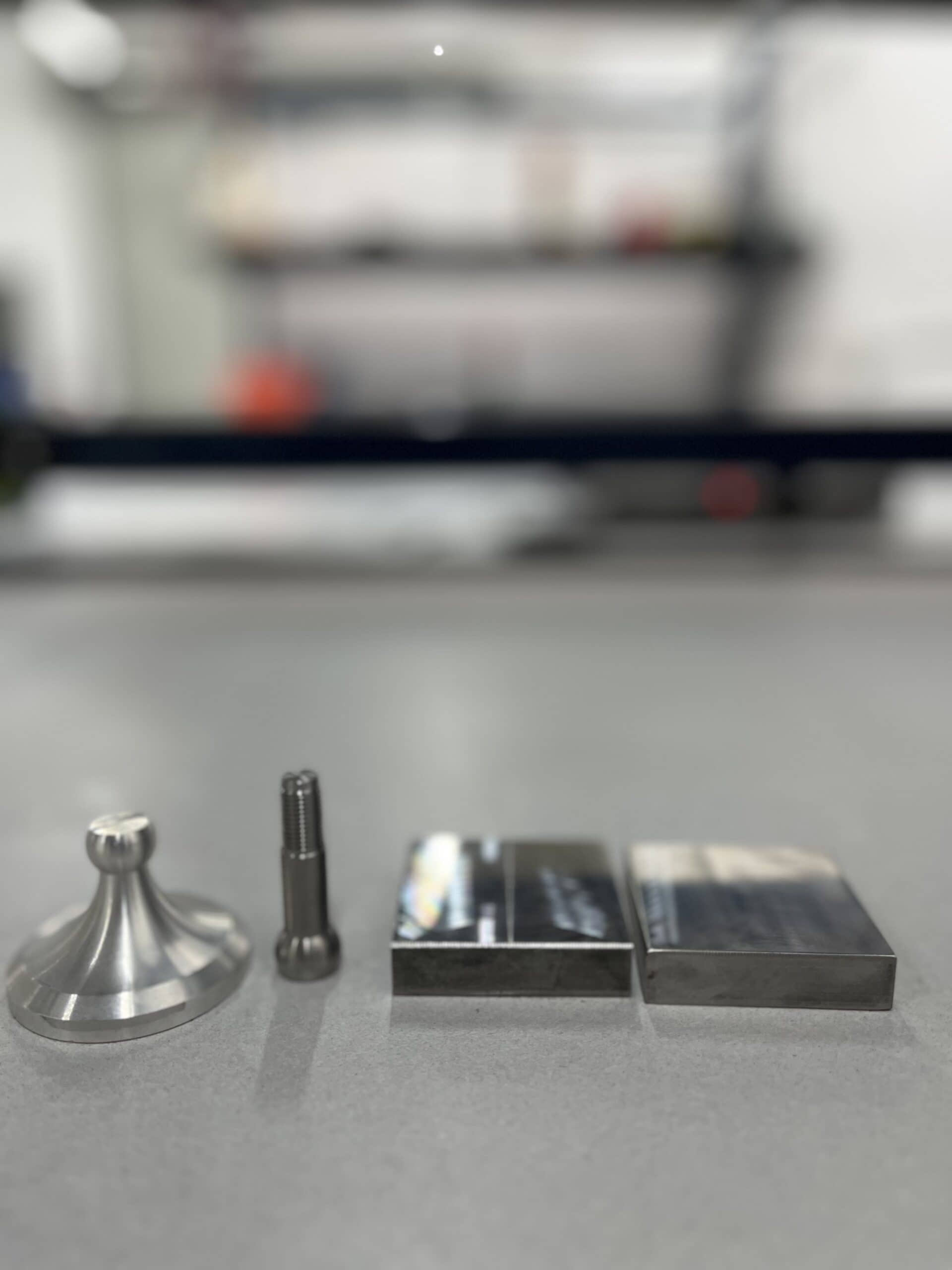
- Bond a steel disc. The surface is cleaned and a steel test disc is glued to the top of the isolated core with a high-strength epoxy, then left to cure.
- Apply the load. A portable pull-off tester is attached to the disc and pulls straight up at a steady rate until the sample breaks.
- Record the result. The peak load, calculated bond strength, and failure mode are recorded for each test.
- Repair the test spots. The small cored areas are patched once testing is complete.
What Do the Failure Modes Mean?
Every pull-off test ends in a break, and the break location tells the story:
| Where the break occurs | What it usually means |
|---|---|
| In the concrete substrate | The bond is stronger than the concrete below it. The bond strength is at least the value measured. |
| At the bond line | The interface is the weakest link. The value measured is the actual bond strength. |
| Within the repair or overlay | The repair material itself is the weakest layer. |
| At the epoxy or steel disc | The test did not load the materials of interest. The result is not valid and the test is usually repeated. |
A low value with a failure at the bond line can point to problems such as poor surface preparation, dust or contamination, an inadequate bonding agent, or improper curing.
What Is an Acceptable Pull-Off Strength?
ASTM C1583 does not set a pass or fail limit. Acceptance values come from the project specification or the engineer of record, and they depend on the type of repair, overlay, or coating. Results are judged on both the measured strength and the failure mode.
Call Us: (310) 205-2535 Get a Quote
Why Is Pull-Off Testing Important?
A repair that looks finished can still be poorly bonded. When the bond fails, the repair can crack, sound hollow, let water in, or come loose entirely, which is a serious concern on balconies, decks, and overhead surfaces. Pull-off testing gives a measured result, so issues can be corrected before the area is closed up or put back into service.
Testing can also prevent disputes. Clear, documented bond strength results give owners, contractors, and inspectors a shared basis for accepting the work.
Is the Pull-Off Test Destructive?
It is partially destructive. Each test removes a small cylinder of material, and the test spots need to be patched afterward. Because the damage is small and localized, pull-off testing is widely used on finished repairs and occupied buildings. Non-destructive methods such as hammer sounding and chain drag surveys are often used first to screen large areas for hollow-sounding zones, with pull-off tests at selected locations.
Pull-Off Testing at Prime Test Engineering
Prime Test Engineering provides pull-off testing, non-destructive testing, and materials testing throughout Southern California. Depending on the project, our work may include test location planning, GPR scanning to avoid reinforcement, field pull-off testing, documentation of failure modes, and a report reviewed by a licensed professional engineer.
Learn more about our non-destructive testing services, construction material testing, and balcony inspection services.
Frequently Asked Questions
What is the difference between a pull-off test and a pullout test?
A pull-off test (ASTM C1583) measures the tensile bond strength of a surface or repair layer. A pullout test (ASTM C900) measures the force needed to pull an embedded insert out of concrete and is used to estimate in-place compressive strength.
How long does pull-off testing take?
Coring and disc installation can usually be done in one visit, but the epoxy needs time to cure before the discs are pulled. Many projects need a second short visit to complete the tests.
How many pull-off tests are needed?
The number depends on the size of the area and the project specification. Tests are usually performed in sets so the results can be averaged and compared.
Can pull-off testing be done on balconies and decks?
Yes. It is commonly used to verify repairs and coatings on balconies, podium decks, and parking structures.
What causes low pull-off results?
Common causes include poor surface preparation, contamination, weak or damaged surface concrete, improper mixing or curing of the repair material, and testing before the material has gained enough strength.
Does a substrate failure mean the test failed?
Not necessarily. A break in the concrete below often means the bond is stronger than the concrete. The engineer reviews the value and failure mode together.
Conclusion
The pull-off test is one of the most direct ways to confirm that a repair, overlay, or coating is properly bonded to concrete. By measuring tensile bond strength and recording where each test breaks, engineers can verify the work, find the cause of weak bonds, and help prevent costly failures later.
Contact Prime Test Engineering to schedule pull-off testing for your concrete repair, overlay, or coating project.
Call Us: (310) 205-2535 Get a Quote