
Concrete cylinder break tests are the standard way to confirm that the concrete placed on a project reaches the strength the engineer specified. Cylinders are cast from the same concrete delivered to the site, cured, and crushed in a lab at set ages, most often 7, 28, and 56 days. Each result tells contractors, inspectors, and engineers something different.
At Prime Test Engineering, we sample, cure, and test concrete cylinders for projects throughout Southern California. Knowing what each break age means helps contractors plan formwork removal, avoid surprises, and respond quickly if results come back low.
What Is a Concrete Cylinder Break Test?
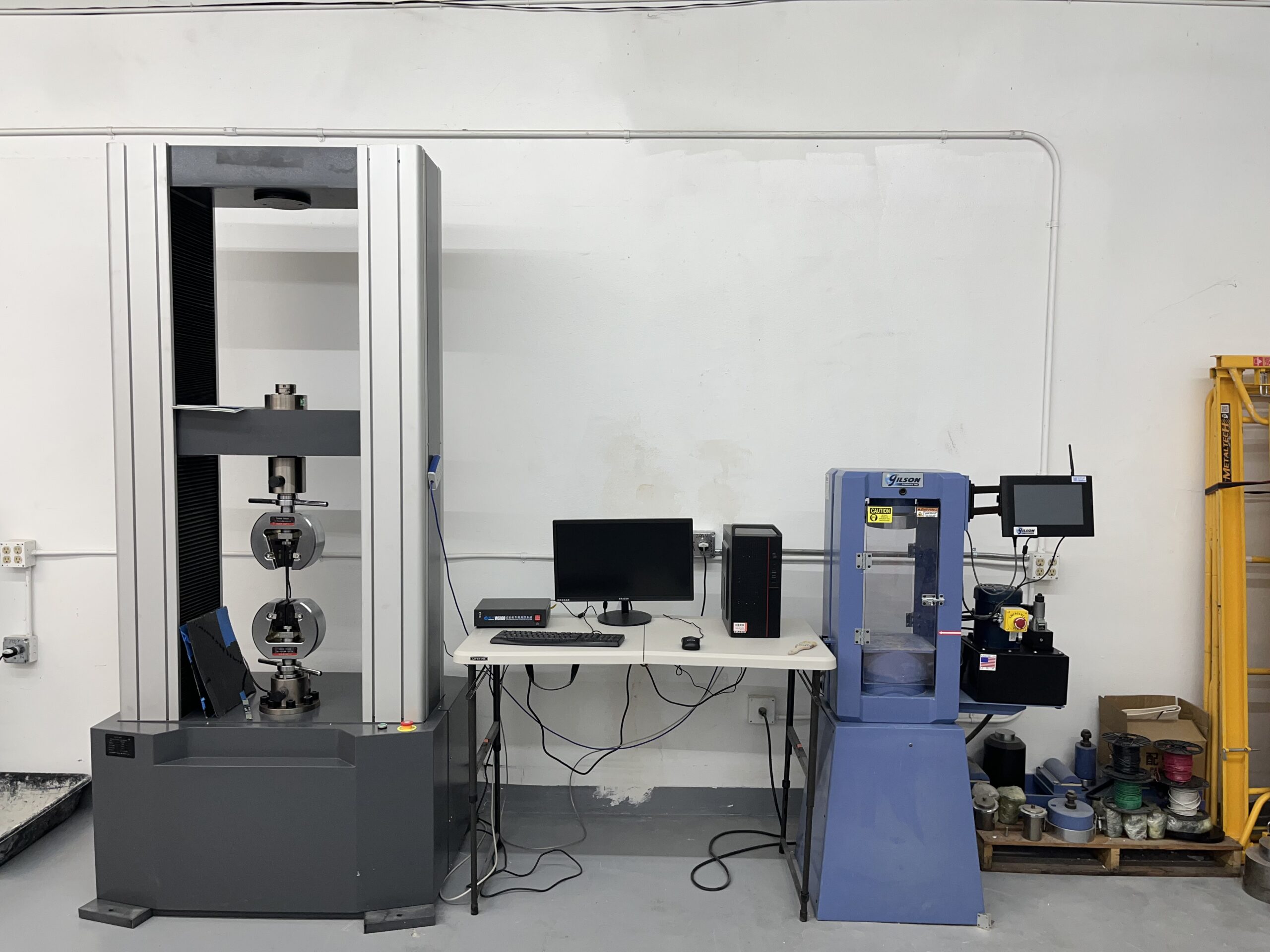
A cylinder break test, or compressive strength test, measures how much load a concrete sample can carry before it fails. A technician casts cylinders from a fresh concrete sample, typically 4 x 8 inch or 6 x 12 inch molds. After curing, each cylinder is placed in a compression machine and loaded until it breaks.
The peak load divided by the cylinder’s cross-sectional area gives the compressive strength in psi. That number is compared with the specified strength, known as f’c, shown on the project drawings.
Which Standards Apply?
- ASTM C31: making and curing test cylinders in the field.
- ASTM C39: testing cylinders for compressive strength in the lab.
- ASTM C1231 or C617: capping cylinder ends so the load is applied evenly.
- ACI 318: the acceptance criteria used to judge whether the concrete is compliant.
How Are Test Cylinders Made and Cured?
The test result is only as good as the cylinder. A typical process looks like this:
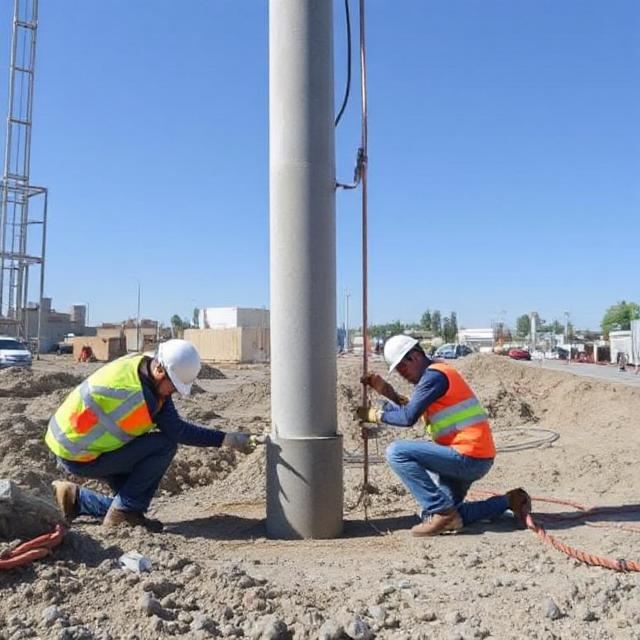
- Sample the concrete. A field technician takes a sample from the truck or pump during placement and records slump, air content, and temperature.
- Cast the cylinders. Molds are filled in layers and consolidated by rodding or vibration, then the tops are finished smooth.
- Initial curing on site. Cylinders are kept protected, generally at 60 to 80 °F, for up to 48 hours. Leaving them in the sun, in the cold, or where they can be bumped can lower the results.
- Transport to the lab. Cylinders are moved carefully to avoid damage.
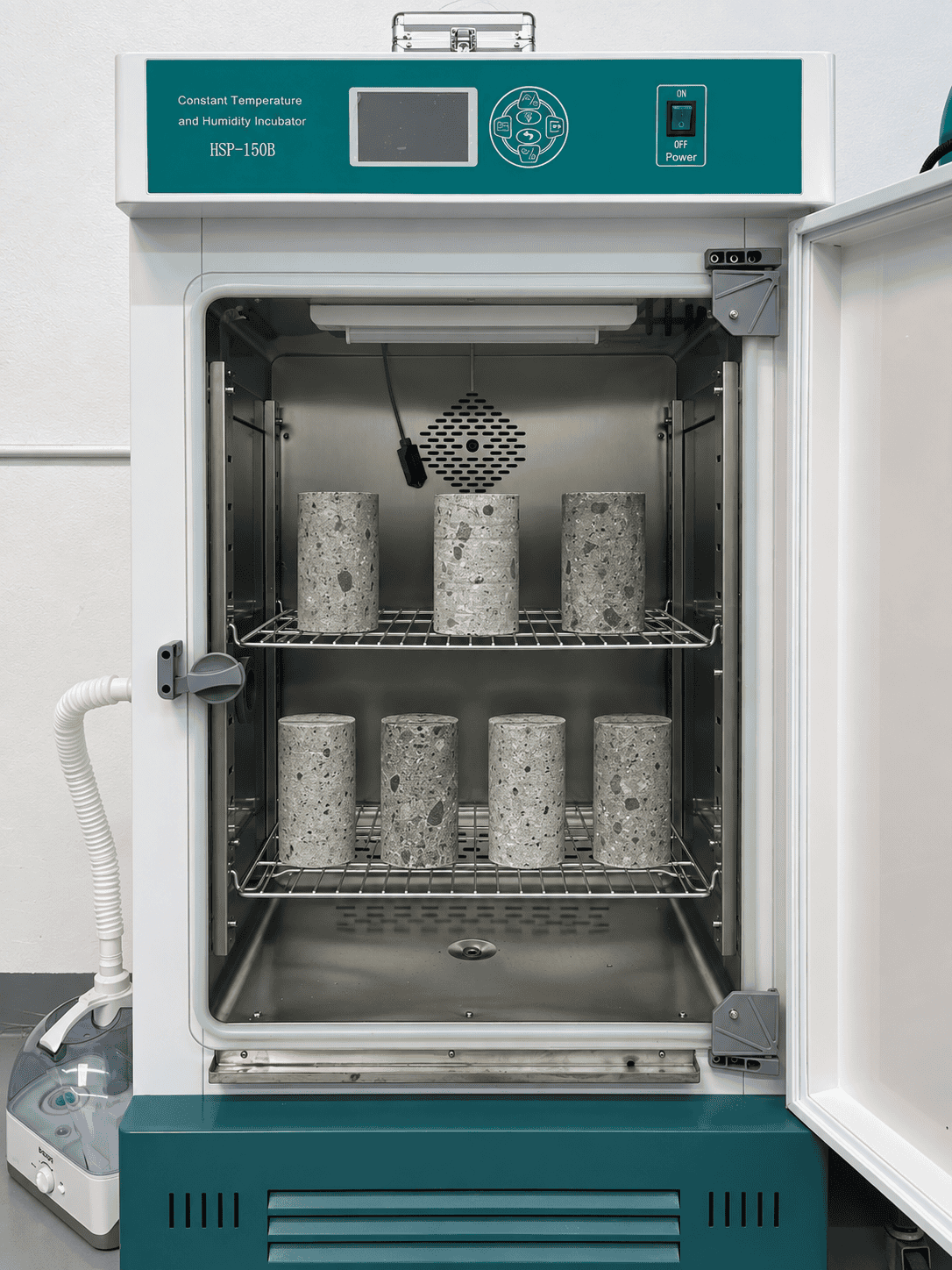
- Standard curing. In the lab, cylinders are stripped and kept in a moist room or curing tank at about 73.5 °F until they are tested.
- Break the cylinders. At each test age, cylinders are capped and crushed, and the strength and fracture type are recorded.
Call Us: (310) 205-2535 Get a Quote
What Do 7-, 28-, and 56-Day Results Mean?
| Test age | What it tells you | How it is used |
|---|---|---|
| 7 days | Early strength gain. Typical mixes often reach roughly 65 to 75% of their 28-day strength by now, but this varies by mix. | An early warning. A very low 7-day result is a reason to watch the 28-day breaks closely. |
| 28 days | The standard acceptance age for most structural concrete. | Compared with f’c to decide whether the concrete meets the specification. |
| 56 days | Later strength for slower-gaining mixes. | Used as the acceptance age when the engineer specifies it, often for mixes with fly ash or slag, or for mass concrete. |
Is a Low 7-Day Break a Failure?
No. The 7-day result is not an acceptance test. Mixes with supplementary materials such as fly ash or slag, and concrete placed in cold weather, can gain strength slowly at first and still pass at 28 or 56 days. A 7-day result is best used to spot trends early and to plan, for example, when shores or forms might come out, with the engineer’s approval.
Why Do Some Projects Use 56-Day Strength?
Some high-performance and mass concrete mixes are designed to gain strength over a longer time. In those cases, the engineer may specify 56-day strength for acceptance. Many labs also cast hold cylinders, extra cylinders kept in reserve and broken only if the earlier results are low.
How Is Concrete Strength Accepted?
Under ACI 318, a strength test is the average strength of at least two 6 x 12 inch cylinders, or three 4 x 8 inch cylinders, from the same sample, tested at the specified age. The concrete is generally considered acceptable when both of these are met:
- Running average: every average of three consecutive strength tests is equal to or greater than f’c.
- Individual tests: no single strength test falls more than 500 psi below f’c when f’c is 5,000 psi or less, or below 90% of f’c when f’c is greater than 5,000 psi.
For example, on a 4,000 psi mix, a single strength test of 3,600 psi does not by itself mean the concrete failed. A test below 3,500 psi does call for investigation. The project specifications always control, so check them for any additional requirements.
Call Us: (310) 205-2535 Get a Quote
What Causes Low Cylinder Breaks?
A low result does not always mean the concrete in the structure is weak. Common causes include:
- Poor field curing: cylinders left in direct sun, freezing temperatures, or unprotected areas during the first day or two.
- Handling damage: cylinders moved too early or jostled during transport.
- Improper casting: poor consolidation, wrong rodding, or uneven tops.
- Capping problems: ends that are not flat or square, causing uneven loading.
- Actual concrete issues: too much water added at the site, wrong mix delivered, or problems with materials.
The fracture pattern recorded by the lab, along with the field reports, helps engineers separate testing problems from real concrete problems.
What Happens If Cylinder Results Are Low?
When results fall below the acceptance criteria, the engineer of record decides the next steps. These commonly include:
- Review the records. Check field reports, batch tickets, curing conditions, and lab data for testing errors.
- Break hold cylinders. If available, extra cylinders may be tested at a later age.
- Screen the structure. Non-destructive methods such as the Schmidt hammer test and ultrasonic pulse velocity help compare the questioned concrete with nearby concrete that tested well.
- Take cores. Cores drilled from the structure under ASTM C42 test the in-place concrete directly. Under ACI 318, the concrete in the area is generally considered adequate when the average of three cores is at least 85% of f’c and no single core is below 75% of f’c.
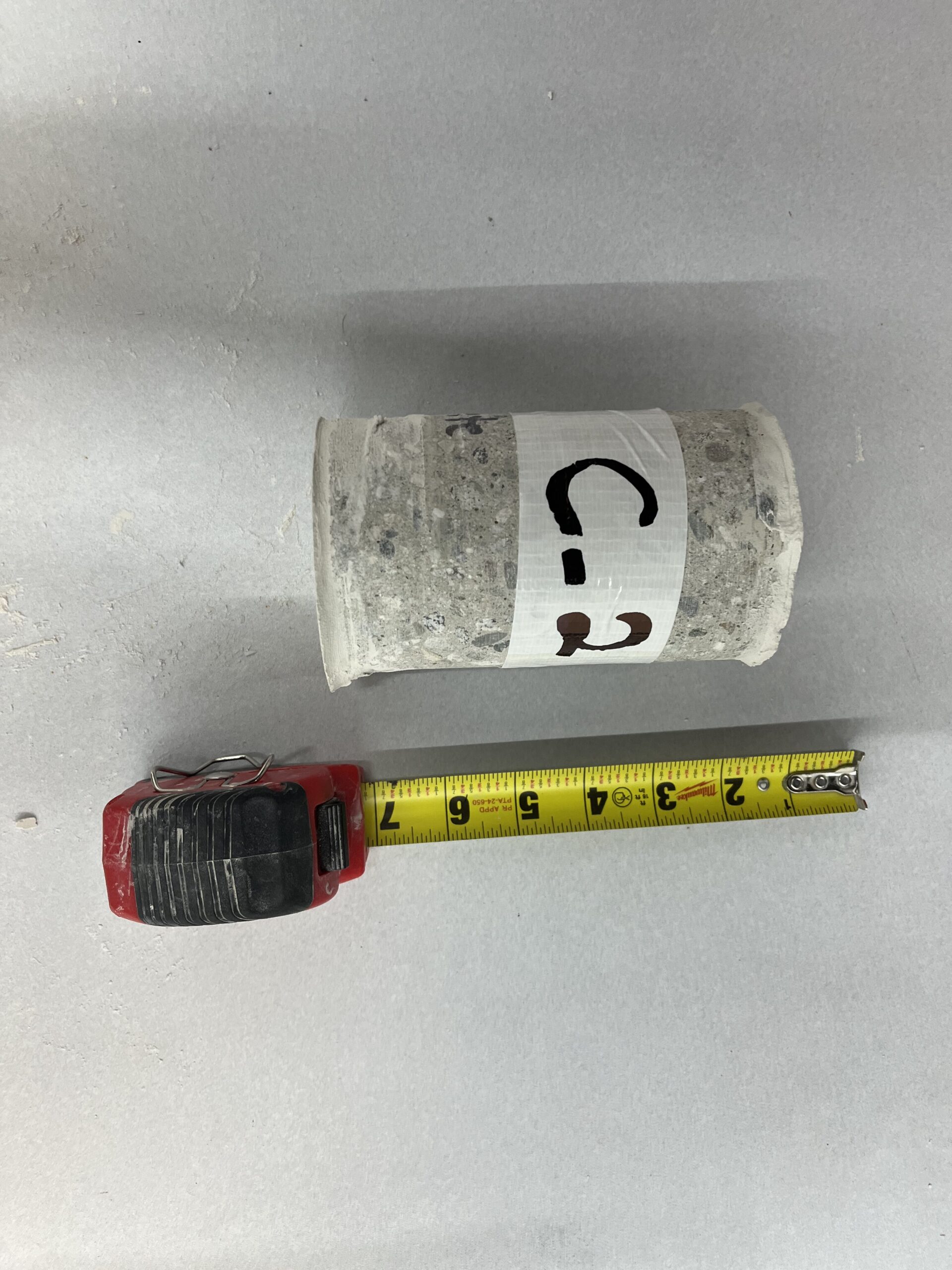
Learn more in our guide to concrete core testing.
Concrete Cylinder Testing at Prime Test Engineering
Prime Test Engineering provides concrete sampling, cylinder casting, curing, and compressive strength testing throughout Southern California. Our services also include field inspection, coring, and non-destructive testing when results need to be investigated, with reports reviewed by a licensed professional engineer.
Learn more about our concrete testing services, construction material testing, and concrete coring services.
Frequently Asked Questions
What percentage of strength should concrete reach at 7 days?
Many conventional mixes reach roughly 65 to 75% of their 28-day strength at 7 days. Mixes with fly ash or slag, or concrete cured in cold weather, may be lower and still pass at 28 days.
How many cylinders are made for each test?
It depends on the specification. A common set includes cylinders for 7-day and 28-day breaks plus one or more hold cylinders. Each strength test uses at least two 6 x 12 inch or three 4 x 8 inch cylinders.
How often are cylinders taken?
ACI 318 generally requires sampling at least once per day of placement, once per 150 cubic yards, and once per 5,000 square feet of slab or wall surface, with the project specifications controlling.
Can I remove formwork based on 7-day results?
Only with the engineer’s approval. Early-age cylinders, often field-cured, can help support that decision, but the timing of form and shore removal is set by the design team.
What is a hold cylinder?
A hold cylinder is an extra cylinder kept in reserve. It is broken only if the scheduled results are low or questionable.
Do low cylinder results mean the structure is unsafe?
Not necessarily. Low results trigger an investigation, which may include reviewing records, non-destructive testing, and coring. The engineer of record evaluates whether the concrete is adequate.
Conclusion
Concrete cylinder break tests give contractors and engineers a clear record of concrete strength over time. Seven-day breaks provide an early warning, 28-day breaks are the usual basis for acceptance, and 56-day breaks serve slower-gaining mixes. Good sampling and curing practices protect the accuracy of every result, and a clear plan for low breaks keeps projects moving.
Contact Prime Test Engineering to schedule concrete sampling and cylinder testing for your next project.
Call Us: (310) 205-2535 Get a Quote