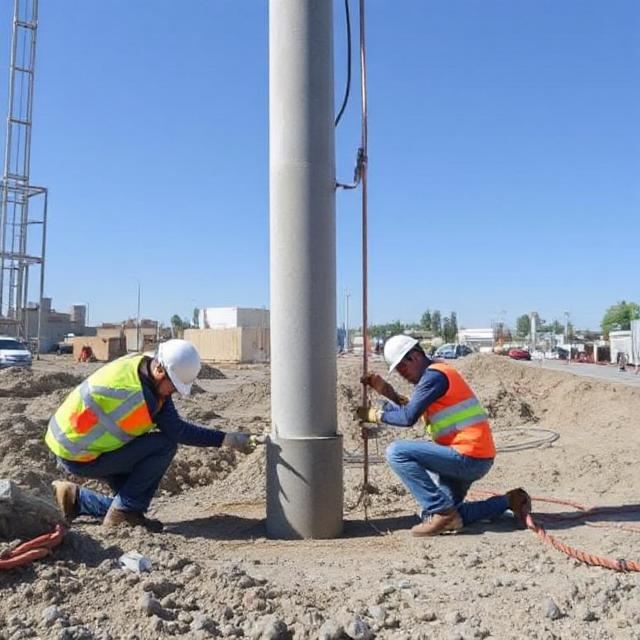

GPR concrete scanning helps technicians locate detectable reinforcing steel, conduits, post-tensioning components, and other concealed features before cutting or drilling concrete. It can also identify radar anomalies that may indicate voids or changes in subsurface conditions, although additional investigation may be needed to determine what those reflections mean.
At Prime Test Engineering, we use ground penetrating radar (GPR) as part of our non-destructive testing and structural investigation services throughout Southern California. This guide explains what the method can tell you, where it works best, and when another test may be needed.
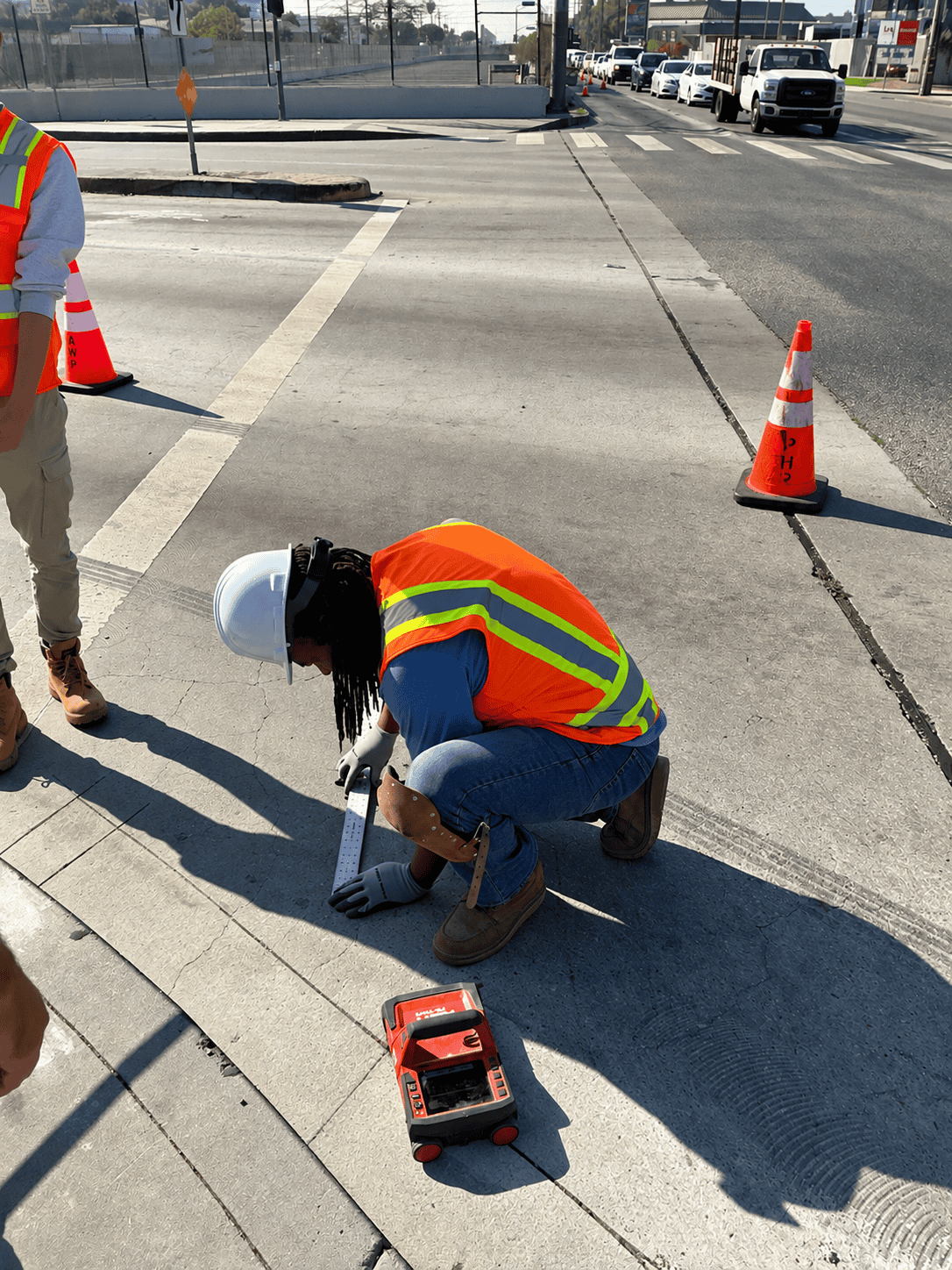
How Does GPR Concrete Scanning Work?
A GPR antenna sends short electromagnetic pulses into concrete and records signals that reflect from objects or boundaries between materials with different electrical properties. Metal reinforcement often produces strong reflections, while other changes in the concrete may also appear in the data.
As the antenna moves across the surface, it builds a record that a trained technician interprets to estimate the position of detectable features. Depth estimates rely on the assumed or calibrated speed of radar waves in the concrete, so they are not exact under every condition.
How Does GPR Locate Rebar in Concrete?
Reinforcing bars often show up as curved, hyperbolic reflections in a radar profile. Scanning in more than one direction can help identify bar positions, spacing, and orientation. The results can guide proposed locations for cores, anchors, and openings.
GPR generally cannot establish reinforcing bar diameter or corrosion condition reliably. If those details matter to the engineering assessment, a limited exploratory opening or a complementary method may be necessary.
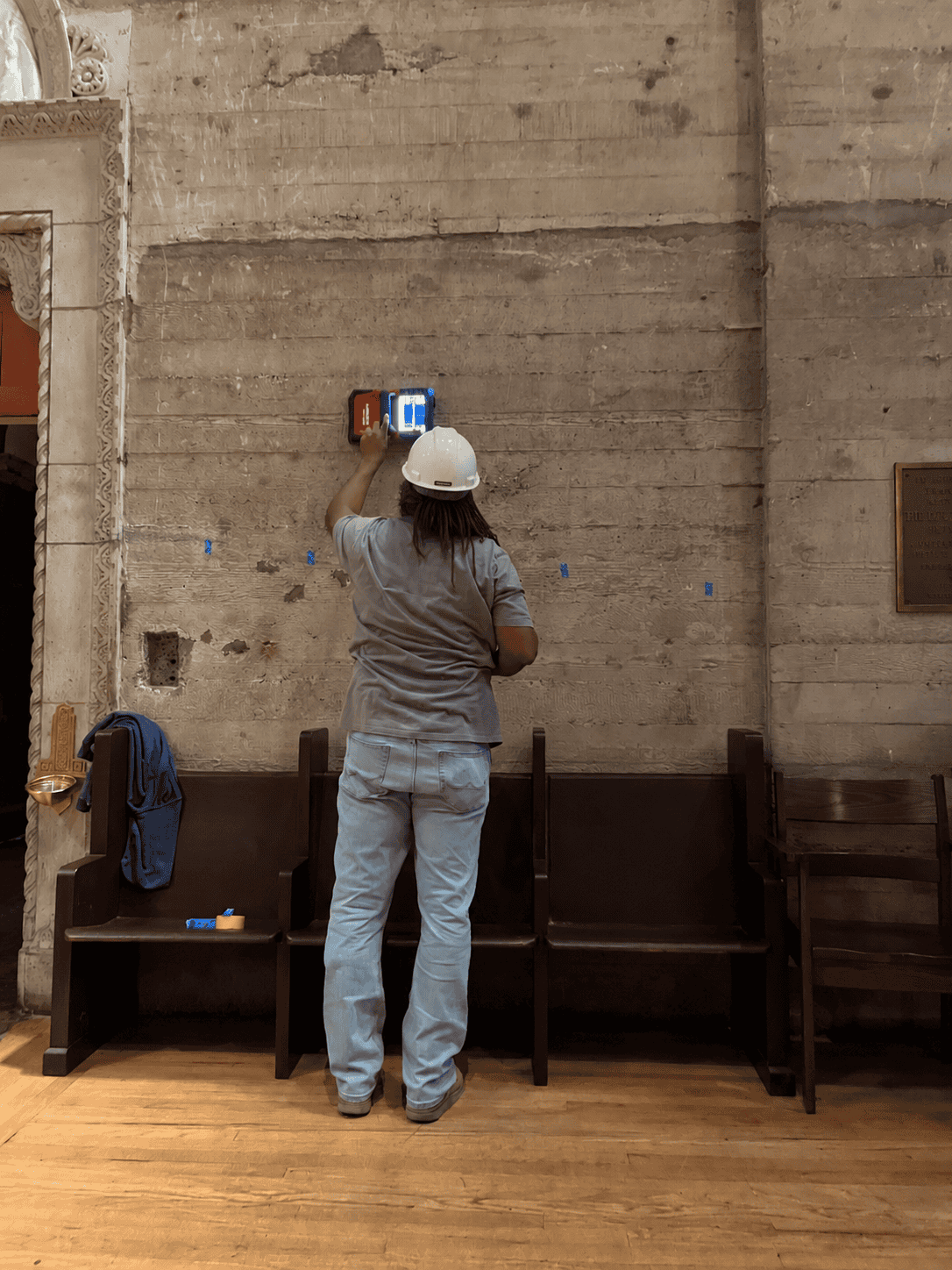
Can GPR Detect Conduits and Post-Tensioning Tendons?
GPR may identify metallic conduits, some nonmetallic conduits, post-tensioning tendons or ducts, and other embedded objects. This can be particularly valuable before construction work that involves drilling or saw cutting.
However, detection is never guaranteed. Dense reinforcement, moisture, object depth and size, and concrete properties can make interpretation difficult. A reflection does not always reveal exactly what type of object caused it. Review available drawings and use appropriate verification before making high-consequence cuts.
Can GPR Concrete Scanning Find Voids?
GPR can sometimes reveal subsurface reflections associated with air gaps, missing grout, or loss of support beneath a slab. A reflection that differs from the surrounding area may help narrow down where further testing is needed.
A GPR anomaly does not confirm a void. Moisture variations, embedded elements, and material interfaces can produce similar signals. Whether a void is detectable depends on its size, depth, shape, and the properties of the surrounding concrete. Concrete coring, exploratory openings, or other methods may be needed to verify an interpretation.
What Is the Difference Between 2D and 3D GPR?
2D GPR scanning collects profiles along individual lines. It is useful for investigating localized areas and mapping detectable reinforcement across proposed drilling locations.
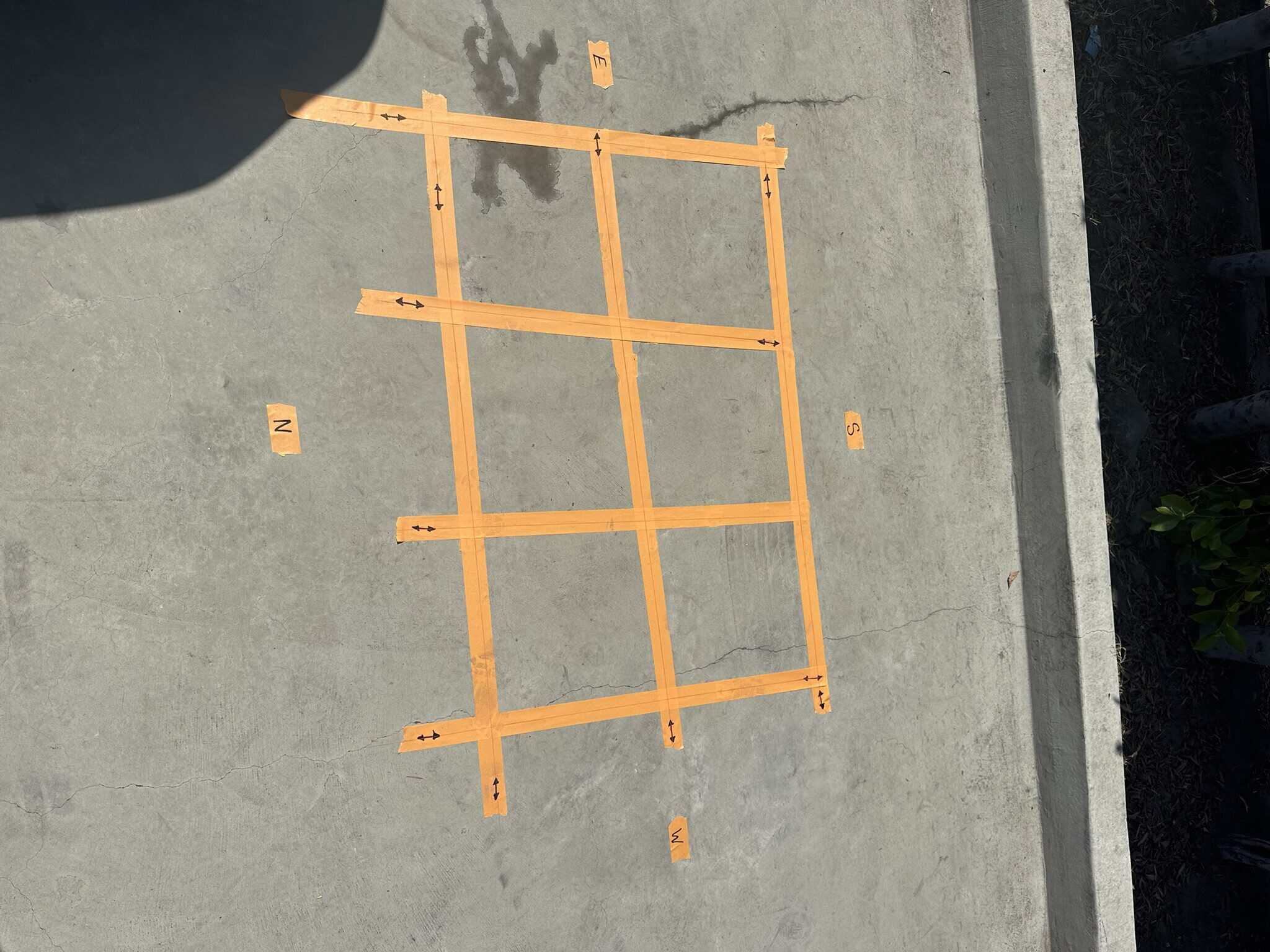
3D GPR scanning combines multiple scan lines, usually gathered in a grid, to display patterns as plan views or depth slices. This makes it easier to study how features are distributed over a wider area. A 3D display adds interpretation options, but does not eliminate the limits of radar penetration or resolution.

When Is GPR Scanning Useful?
- Before coring or drilling: identify detectable embedded objects near proposed work areas.
- During renovation: investigate concealed reinforcement or services before modifying a slab or wall.
- For existing-building assessments: help document reinforcement arrangements where drawings are missing or incomplete.
- For suspected subsurface defects: identify anomalies that may justify targeted verification.
For concrete scanning ahead of construction work, see our GPR scanning services. Projects that require strength verification may also involve concrete coring and testing.
What Happens During a GPR Concrete Scanning Visit?
- Define the objective. Determine whether the project needs rebar mapping, obstruction screening, or investigation of potential anomalies.
- Review site conditions. Consider surface access, thickness, reinforcement congestion, and available drawings.
- Collect scan data. Use a survey pattern appropriate for the target and area.
- Interpret findings. Review reflections and identify limitations or areas needing verification.
- Communicate results. Mark detectable features or provide documentation appropriate to the agreed scope.
What Are the Limitations of GPR Concrete Scanning?
Wet or highly conductive concrete can reduce radar penetration. Multiple closely spaced reinforcing bars can obscure objects below them. Target size and depth affect detectability, and some features generate similar reflections. For these reasons, GPR is a useful investigation tool, not a guarantee that all hidden objects or defects have been located.
Why Contact Prime Test Engineering?
Prime Test Engineering provides GPR scanning and complementary non-destructive testing services for concrete structures in Southern California. Depending on your project, our team can help determine whether GPR alone meets the investigation objective or whether additional methods may be appropriate.
Frequently Asked Questions About GPR Scanning
Does GPR damage concrete?
No. GPR collects data from the surface and does not normally require drilling or removing concrete during scanning.
Can GPR tell whether a void is present?
It may detect an anomaly consistent with a void, but confirmation can require another investigation method.
Is GPR enough to clear a slab for drilling?
Not always. It can reduce uncertainty about detectable features, but no scan guarantees that every embedded component will be identified.
Conclusion
GPR concrete scanning can help project teams make better-informed decisions before working on existing concrete. It is most useful when the purpose of scanning is clear, its limitations are understood, and additional verification is used where necessary. Contact Prime Test Engineering to discuss the appropriate approach for your next project.